WELSUM ENTERPRISES
REAL ESTATE
Real Estate Solutions for Transitional & Supportive Housing
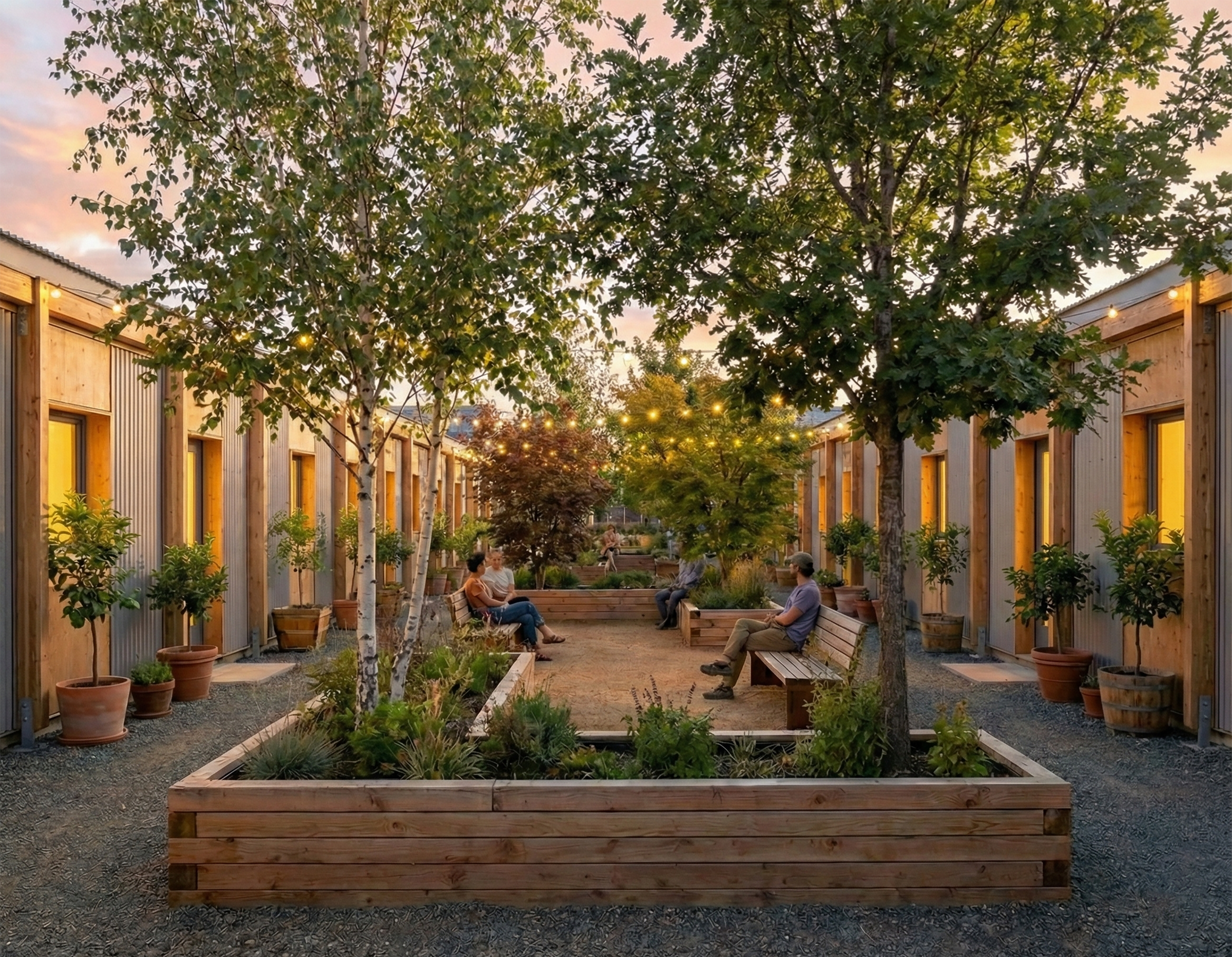
Welsum Enterprises Real Estate is a real estate platform focused on transitional and supportive housing.
We acquire and reposition overlooked properties, partner with experienced operators, and steward assets through stabilization - proving that good development and good outcomes are not in conflict.Our goal is to make places of welcome for those in most need of welcoming places.
The Gap
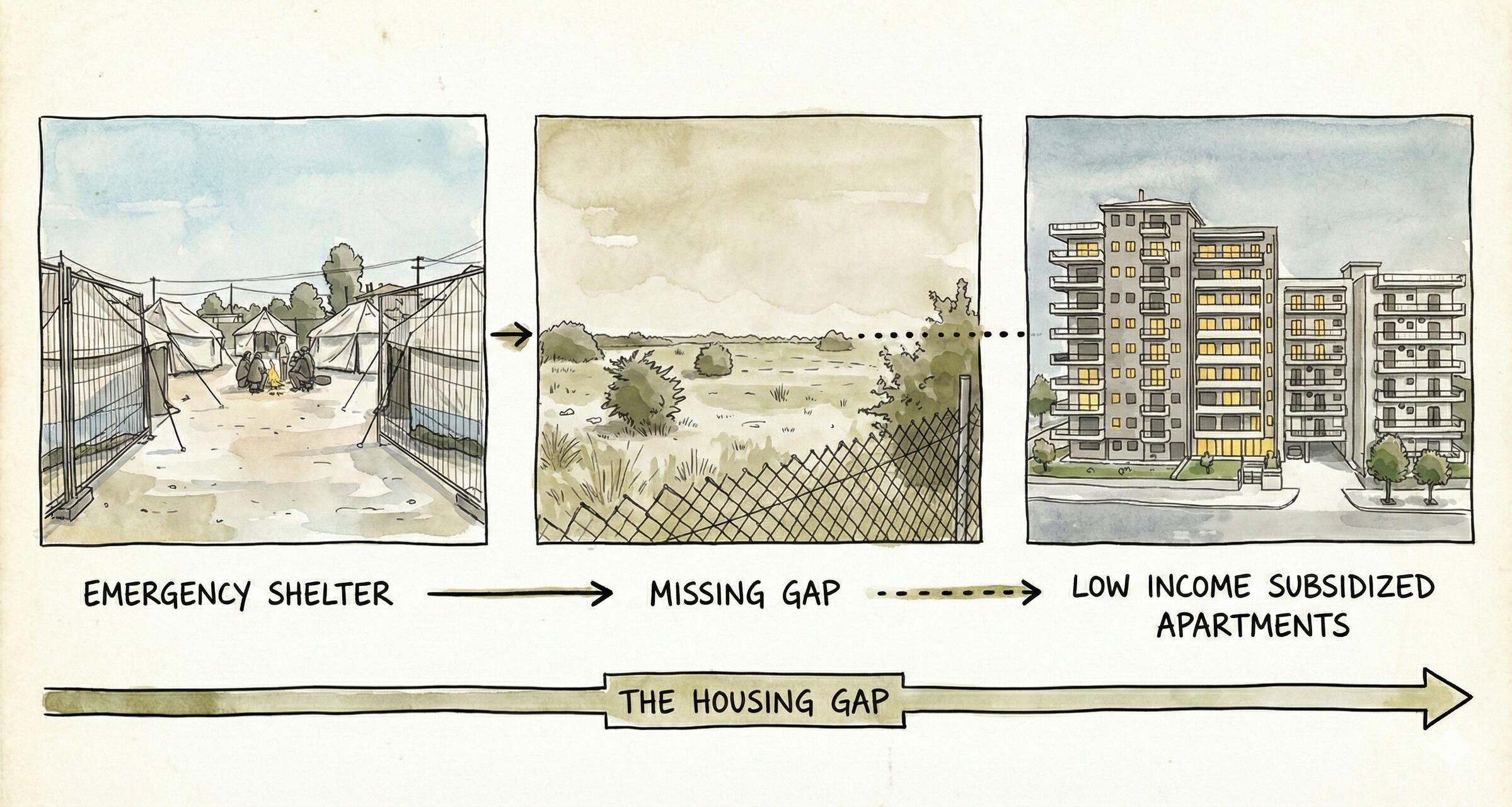
Our housing system is built around two extremes: emergency shelter and permanent housing.
For many people, the leap between the two is simply too large.What’s missing is a dignified middle ground — transitional, supportive housing that restores routine, stability, and readiness without institutional scale or cost.This gap is not only social. It is spatial and economic.Across our cities sit underutilized properties - vacant retail, excess parking, surplus civic and faith-owned land - carrying cost but providing no benefit. At the same time, communities struggle to place people who are not ready for permanence, yet cannot remain in crisis.
The Opportunity
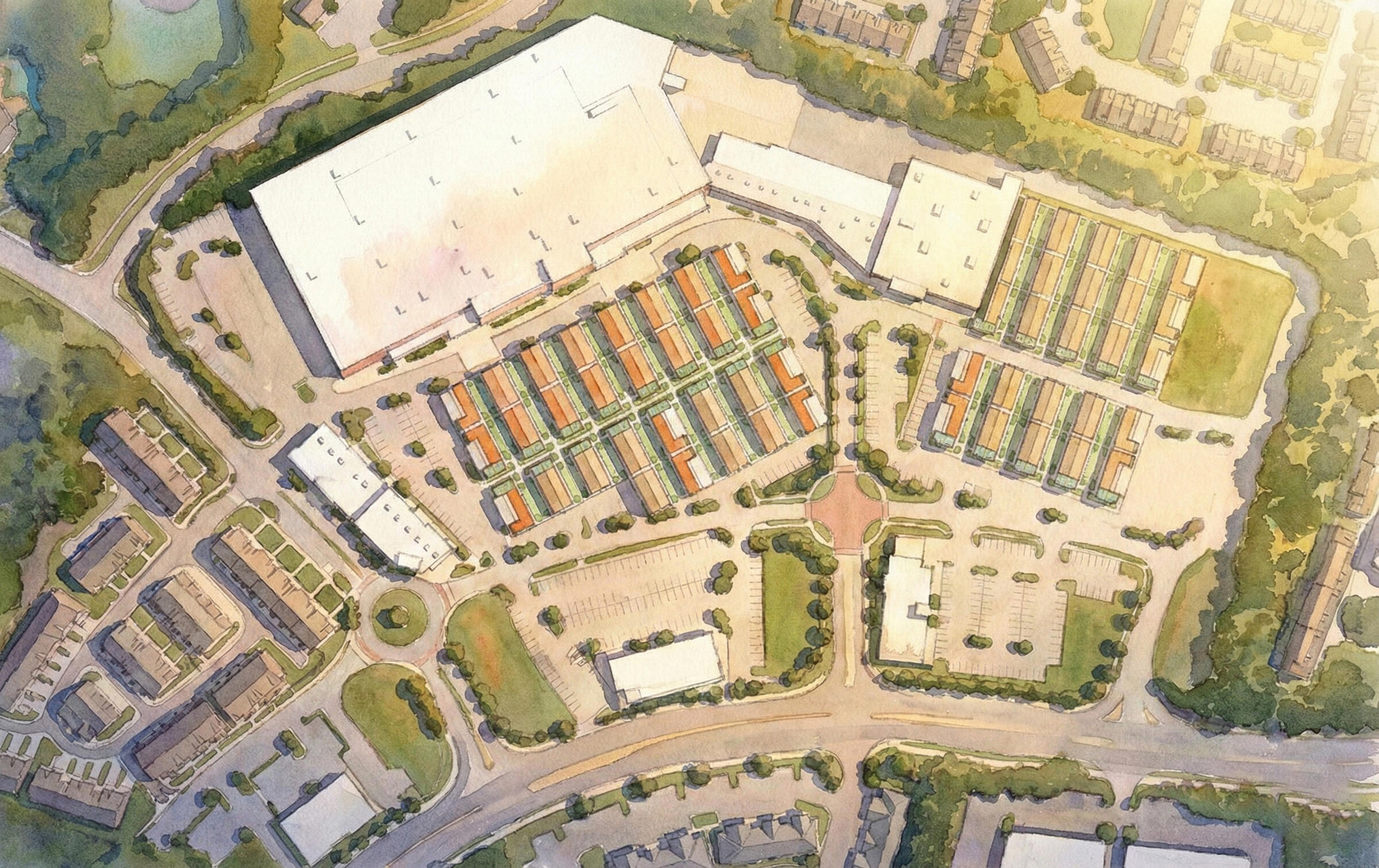
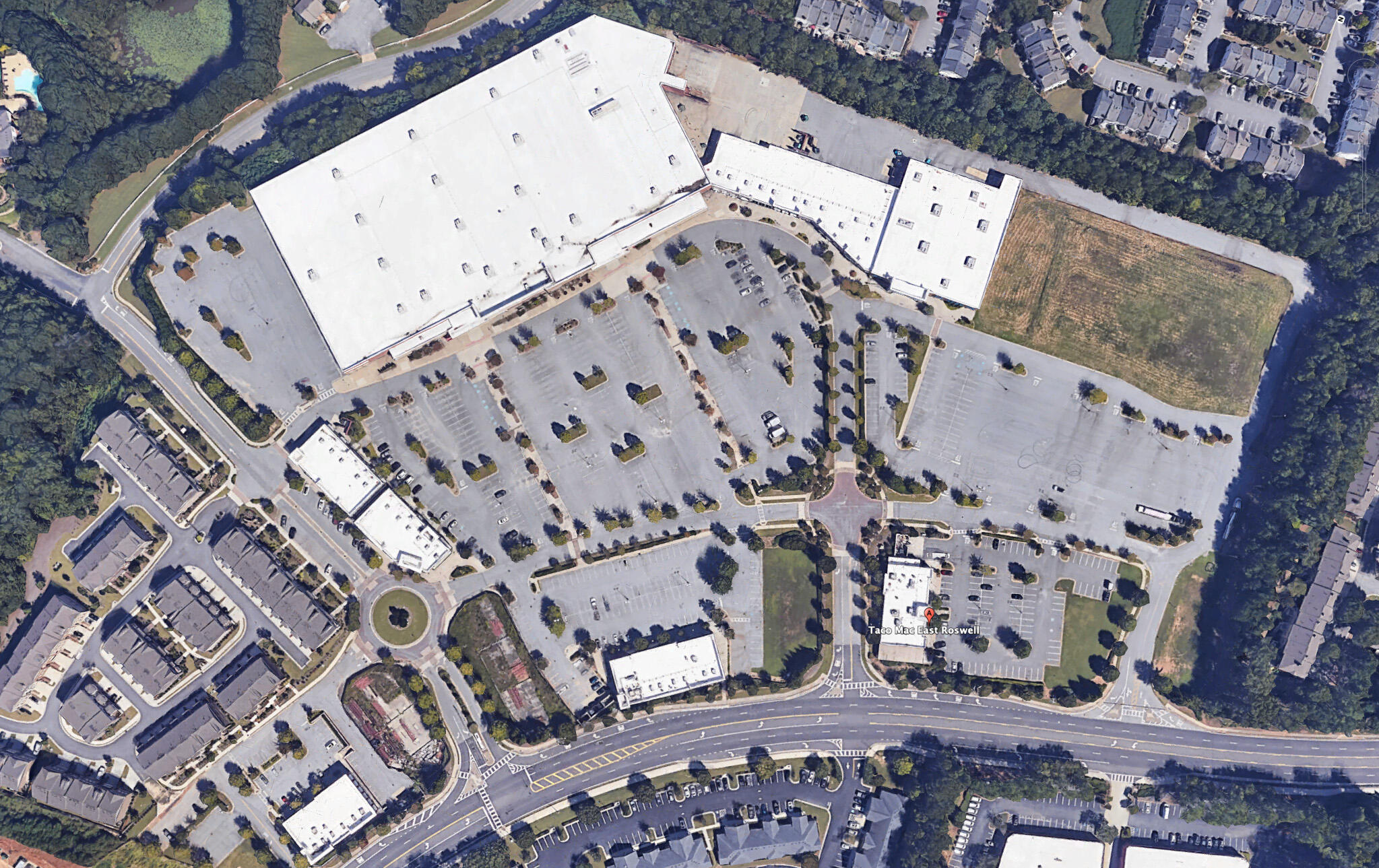
The Opportunity: A Land-Use MisalignmentAcross cities and suburbs, we see two distinct types of dormant value:The Sprawl: Vacant big-box retail and excess parking lots that sit dormant while carrying ongoing liability.The Gaps: Skipped-over urban infill lots near transit and jobs that are complicated for conventional developers.These sites often trade below replacement cost and resist traditional redevelopment. Yet they are frequently infrastructure-ready and politically visible.The Human Disconnect
At the same time, communities lack appropriate places for people in transition. We force everyone into a single "homelessness" bucket, ignoring that recovery requires different environments for different stages - immediate stabilization vs. long-term reintegration.The WE'RE Approach
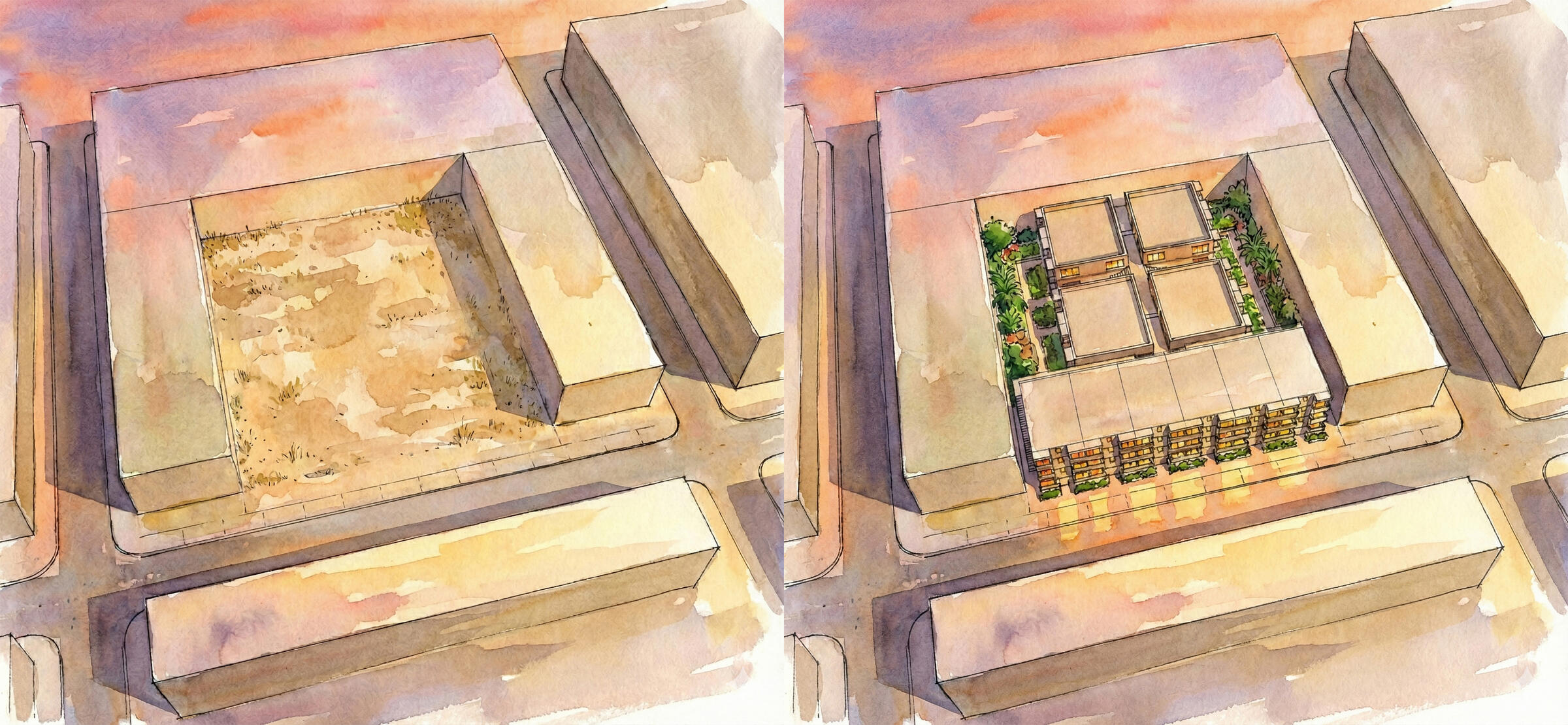
WE'RE views this not as a social inevitability, but as a design flaw. By matching agile housing to suburban sprawl and permanent infrastructure to urban gaps, we reposition land to stabilize people and create long-term value.
The Pilot
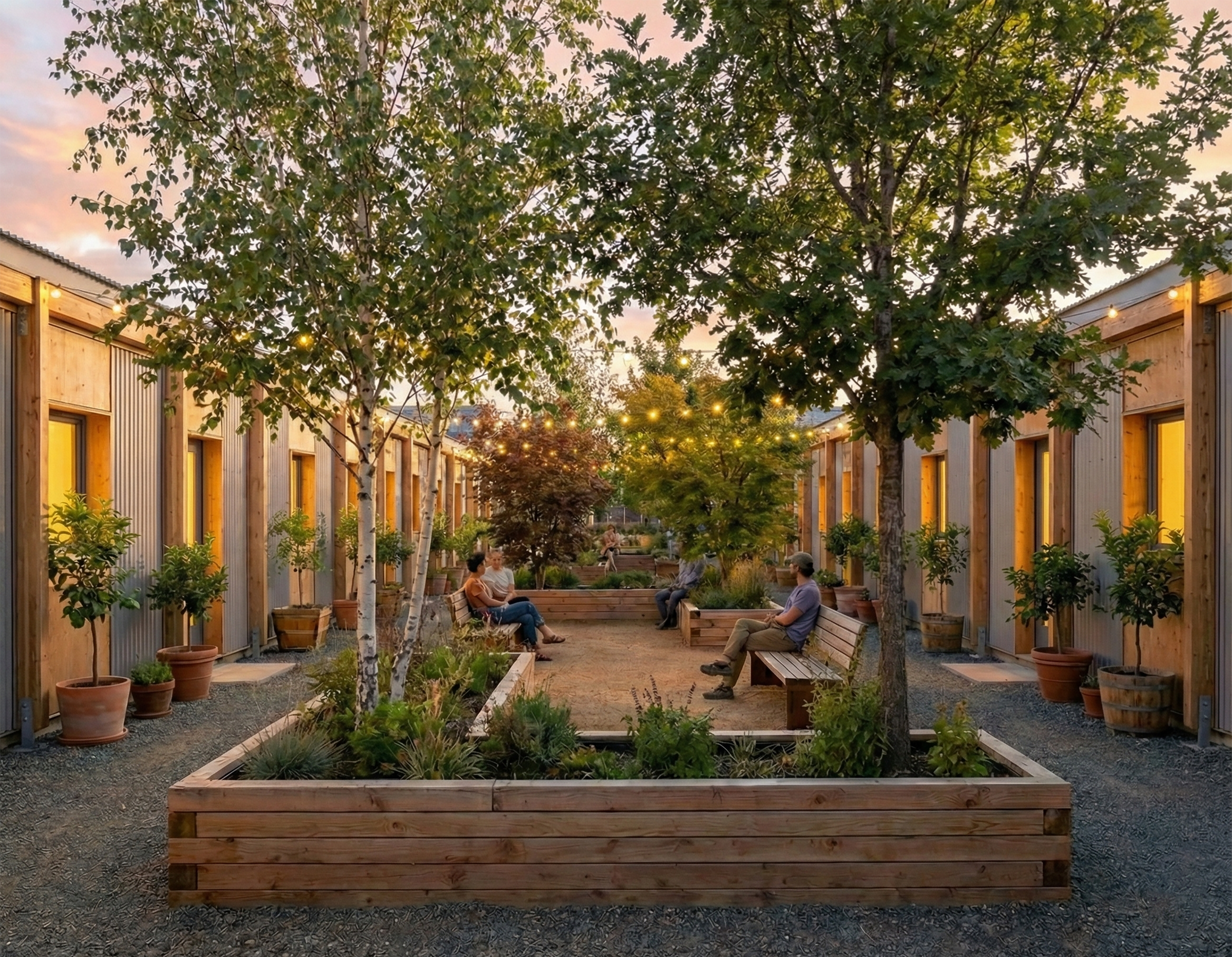
The Pilot: The Garden ModelThe initial focus is a single deployment of The Garden Model—designed to be repeatable rather than exceptional.The Concept: High-Design Stability By starting with a rapid-deployment solution, the model can be tested and refined without excess risk. The Garden serves as a "bridge," utilizing high-quality, relocatable micro-cottages to activate underutilized land. This creates instant, dignified communities for workforce and transitional residents.A first pilot consists of a cluster of private dwellings arranged around shared green space ("Pocket Neighborhoods"). The emphasis is on speed, clarity, and measurable outcomes.12–24 Units: Factory-built, modular micro-cottages (300-400 sq. ft.).Agile Locations: Underutilized commercial, civic, or church-adjacent land.Mobility: Chassis or skid-mounted units allow for relocation if land use changes.Partnership: Operated by an experienced provider.The goal is not just to house people, but to establish a clear framework—proving it once, then repeating with discipline.
Scalable Solutions
Scalable Solutions: Two Speeds of InterventionWe are addressing the crisis with two distinct project models, each designed for a specific phase of the recovery journey and urban context.We are solving for both speed and stability. By deploying The Garden for rapid, mobile activation and The Harbor for permanent infrastructure, we provide the immediate footing needed to halt the crisis today while building the sanctuary required for sustained independence.
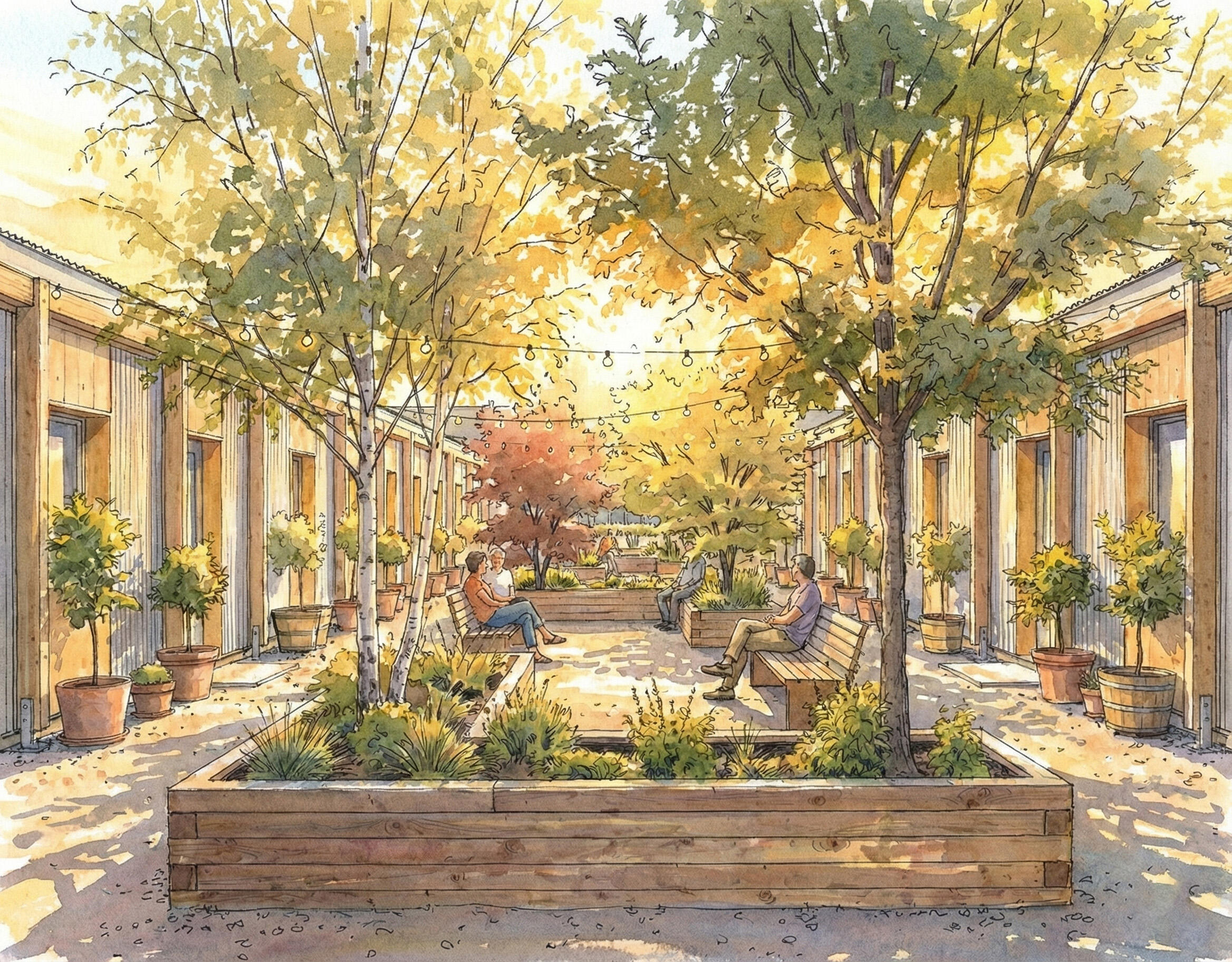
1. THE GARDEN MODEL (Agile Infill) Best for: Suburban parking lots, faith-owned land, and rapid activation.The Garden is a "hardware" solution for immediate stability. The housing is intentionally modest but high-design, breaking the stigma of transitional living.Courtyard-Oriented Site Plans: Units face inward toward shared green space, not outward toward asphalt.Human Scale: Clusters of 20+ units that preserve neighborhood sightlines.Unit Types: Chassis-mounted or skid-mounted micro-cottages (300–400 sq. ft.) that allow for relocation if land use changes.
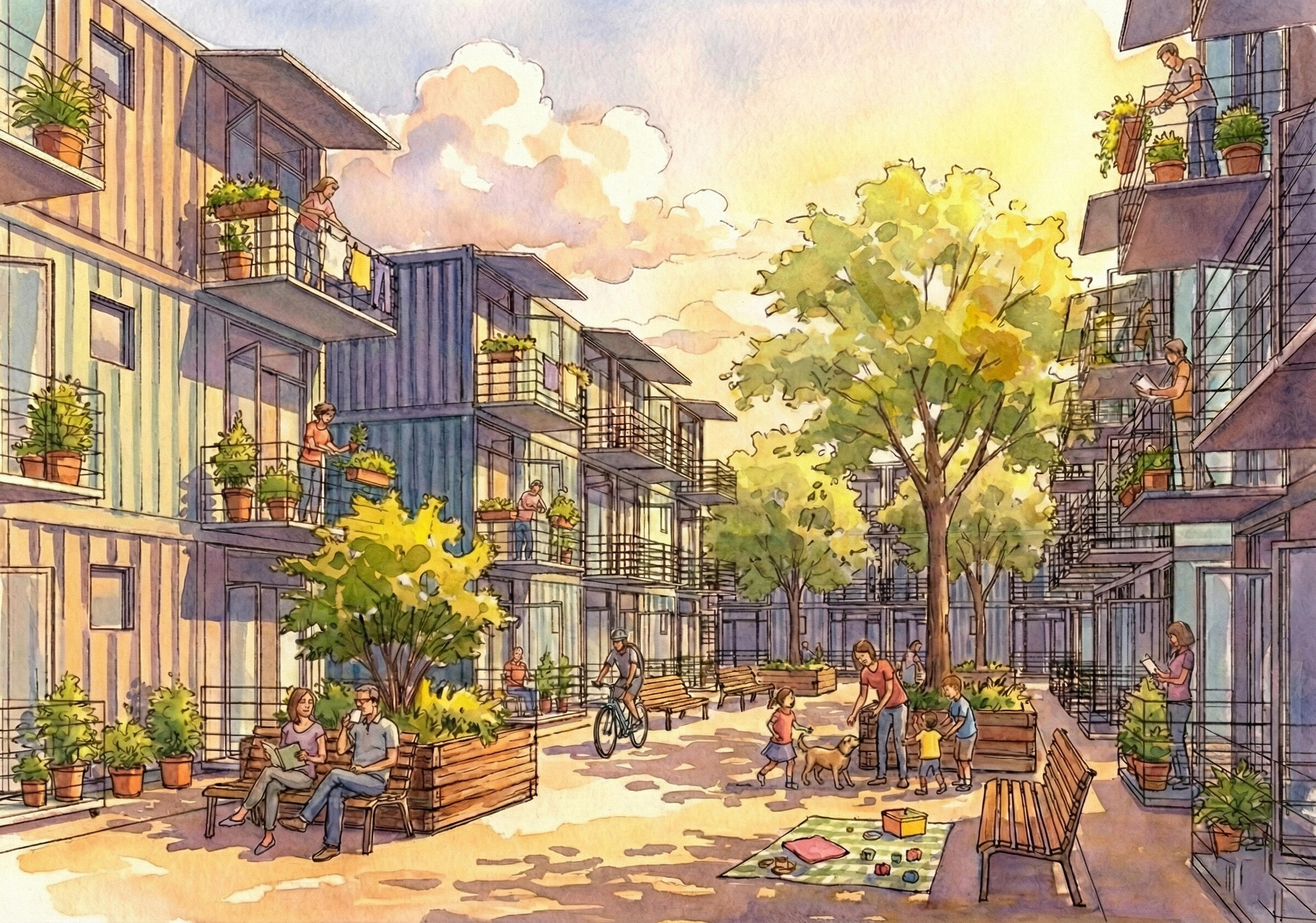
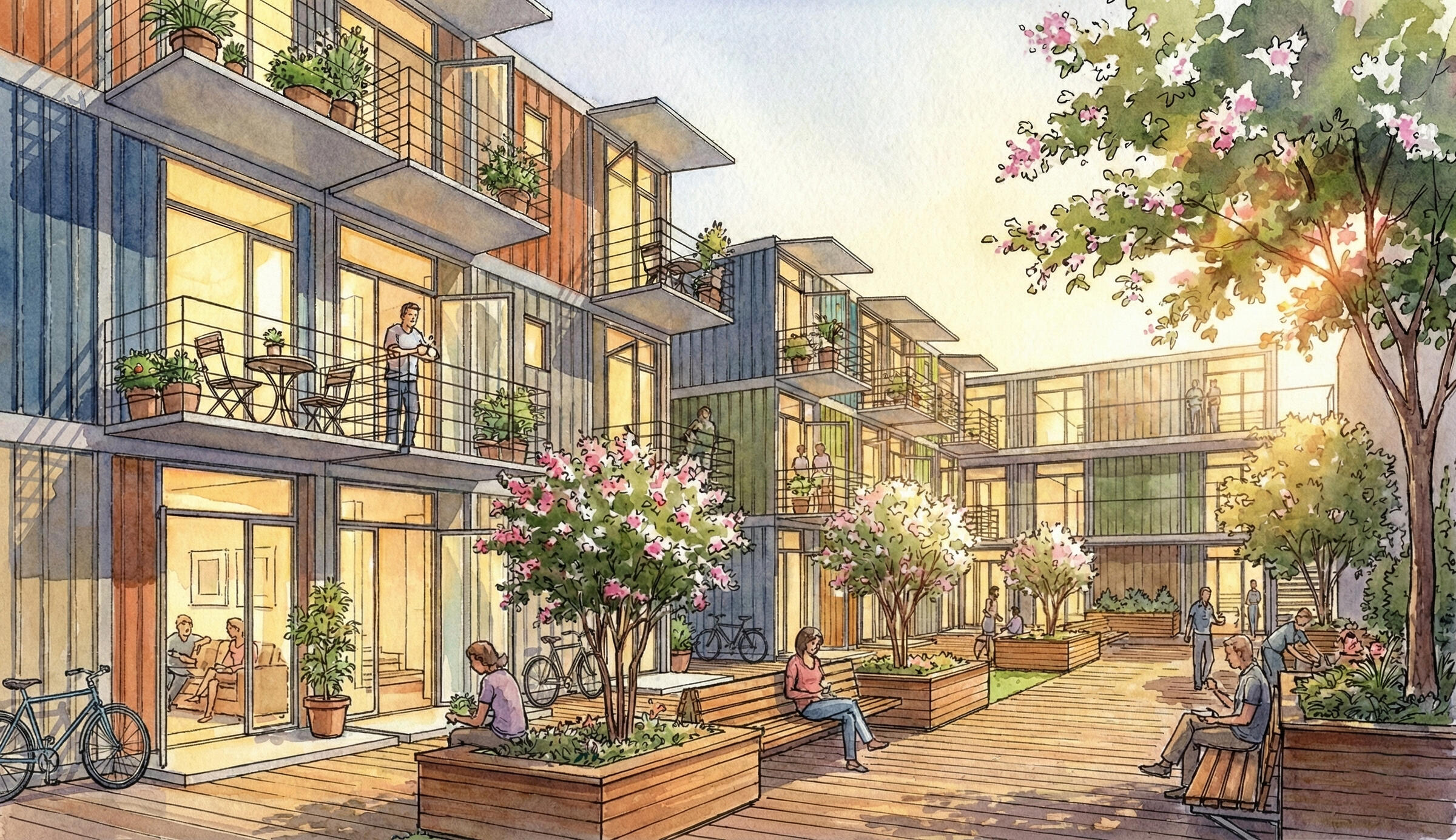
2. THE HARBOR MODEL (Urban Density) Best for: Transit corridors, industrial reuse, and underutilized urban land.The Harbor is a "Port of Call" in the recovery journey. These are permanent, 3-story modular walk-ups designed to provide "Protective Calm"—a sanctuary where residents can rest, resupply, and prepare for the next leg of their life.Scalable Density: Scaling to 60–100+ units while retaining the intimacy of a small community.Sanctuary Design: Architecture that prioritizes sound attenuation, private thresholds, and warm materials to ensure psychological safety.Unit Types: Stacked modular studios designed for high-efficiency footprints, built within the flow of the city to connect residents to jobs and transit.
Designed to be a welcoming place, not just a program.
The Model
WE’RE operates as a real estate owner and developer, not a service provider.The model separates ownership, operations, and care — allowing each party to do what it does best, while aligning incentives around long-term stability.WE’RE (Owner / Developer)- Acquires or controls land and buildings
- Entitles and improves property for transitional use
- Designs dignified environments at range of scales
- Risk Mitigation: The entire facility is Master Leased to the qualified operator or municipal partner, guaranteeing rental income regardless of individual unit occupancy.Operating Partners- Provide resident services and programming
- Manage day-to-day site operations
- Receive public, philanthropic, or contractual funding
- Operate independently within agreed standardsCapital & Public Partners- Support acquisition, entitlement, or early improvements
- De-risk deployment through grants or guarantees
- Enable long-term, stable tenancyBy keeping operations and ownership distinct, the real estate remains durable even as programs evolve. This structure reduces risk, improves accountability, and supports repeatable deployment across multiple sites.
The Economics
WE’RE approaches transitional housing as a value-add real estate strategy, not a charitable expense.By acquiring underutilized property, repositioning it through thoughtful entitlement and design, and securing stable long-term tenancy, value is created for communities and capital partners at the same time.Revenue stability is supported by publicly backed or mission-aligned operators, while downside risk is reduced through clear role separation and modest, repeatable project scale.This allows assets to stabilize over time and be held or transferred to long-term owners aligned with the mission.Value-add acquisition
- Below-replacement-cost acquisition
- Entitlement and political de-risking
- Long-term, stable tenancy
- Modest operating volatility
- Clear exit pathways
- Entitlement and political de-risking
- Long-term, stable tenancy
- Exit to mission-aligned or ESG buyers in 3–6 yearsAssets are typically held through stabilization, then exited to mission-aligned buyers, impact funds, or long-term holders within a 3–6 year horizon. Equity is recycled into subsequent projects to enable repetition and scale.Retained earnings are reinvested to scale impact, while ensuring competitive debt service coverage and sustainable land lease payments for partners. We believe good development and good outcomes are not in conflict.
The Platform
Welsum Enterprises is a purpose-built real estate development platform. We bridge the gap between underutilized commercial assets and the urgent demand for transitional housing.We operate as a lean, discipline-led developer, partnering with best-in-class non-profit operators and municipal stakeholders. Our core competencies include:- Strategic Site Acquisition & Adaptive Reuse- Trauma-Informed Architectural Design- Public-Private Partnership Structuring
The Founder's Note
Welsum Enterprises was born from a critical observation: while cities invest heavily in emergency shelter and permanent housing, the space in between is often overlooked. That gap—where stability is fragile and dignity matters most—is where architecture can have its greatest impact.As an architect, I know that buildings do more than shelter us; they shape our self-perception. Traditional transitional housing often prioritizes efficiency over humanity, unintentionally reinforcing feelings of disposability.We exist to challenge that pattern.We believe the built environment is not neutral; it is formative. Welsum repurposes underutilized land with architectural intention and economic discipline to create "Hardware for Hope." We build spaces that offer more than just a roof—we build the cues of psychological safety, belonging, and the clear possibility of forward movement.We don't just build units. We build identity.— Daniel Osborne Founder, Welsum Enterprises
Bio
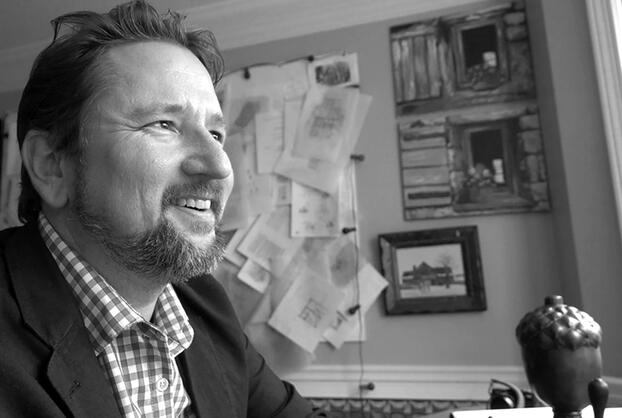
Daniel Osborne is an architect, designer, and real estate strategist with over two decades of experience in residential, hospitality, and mixed-use development. He is the founder of Welsum Enterprises, a design-led development platform focused on dignified transitional housing through adaptive reuse.Daniel’s work sits at the intersection of social purpose and rigorous design thinking. After formative years at Auburn University’s Rural Studio, where he learned that dignity is a fundamental right, he spent 17 years at Historical Concepts, rising from intern to Partner and leading complex, high-stakes projects for exacting clients.Since founding his independent practice in 2020, Daniel has expanded his scope to master planning and development strategy. Welsum Enterprises represents the synthesis of this work: applying high-level architectural judgment to essential housing, turning tight constraints into humane, durable environments that solve for both immediate crisis and long-term stability.
Join the Founding Team
Welsum Enterprises is currently selecting key strategic partners to round out our founding executive team. We are specifically seeking expertise in Capital Strategy and Operations.To Discuss: Please direct expressions of interest to [email protected]. Kindly use the subject line: 'Executive Partnership' to ensure your inquiry is routed to the founder immediately.
In Conversation
For Capital & Land Owners: We are vetting partners for our 2026 Pilot Portfolio. If you control underutilized commercial assets or represent mission-aligned capital, let’s discuss the yield and impact potential.For Municipalities & Grantors: We provide a turnkey solution for the "Missing Middle." If you are seeking to deploy rapid, high-accountability transitional housing before the 2026 World Cup, request our Capability Statement.For Operators & Community: We are always seeking experienced service providers, ministry partners, and community advocates to join the mission.
770-744-3558
Welsum (Old English): "Prosperous, welcome, and in good condition."
© 2026 Welsum Enterprises, LLC. All Rights Reserved.